

Travel Advisor
What Is Backpacking Travel? The Word Means Two Different Things
One word, two activities that share almost nothing but a bag. Which one you mean changes the gear, the cost, the risk and the skills, so it is worth settling first.
Two decisions cover almost everything: get the length right for your weight, and choose a continuous rocker. Everything else is preference and price.
Affiliate disclosure. This guide contains affiliate links, including Amazon Associates links. If you buy through one, Smart Travel Info may earn a commission at no additional cost to you. Products are selected on published specifications and suitability for learners. Commission rates play no part in the ranking. See our editorial policy.
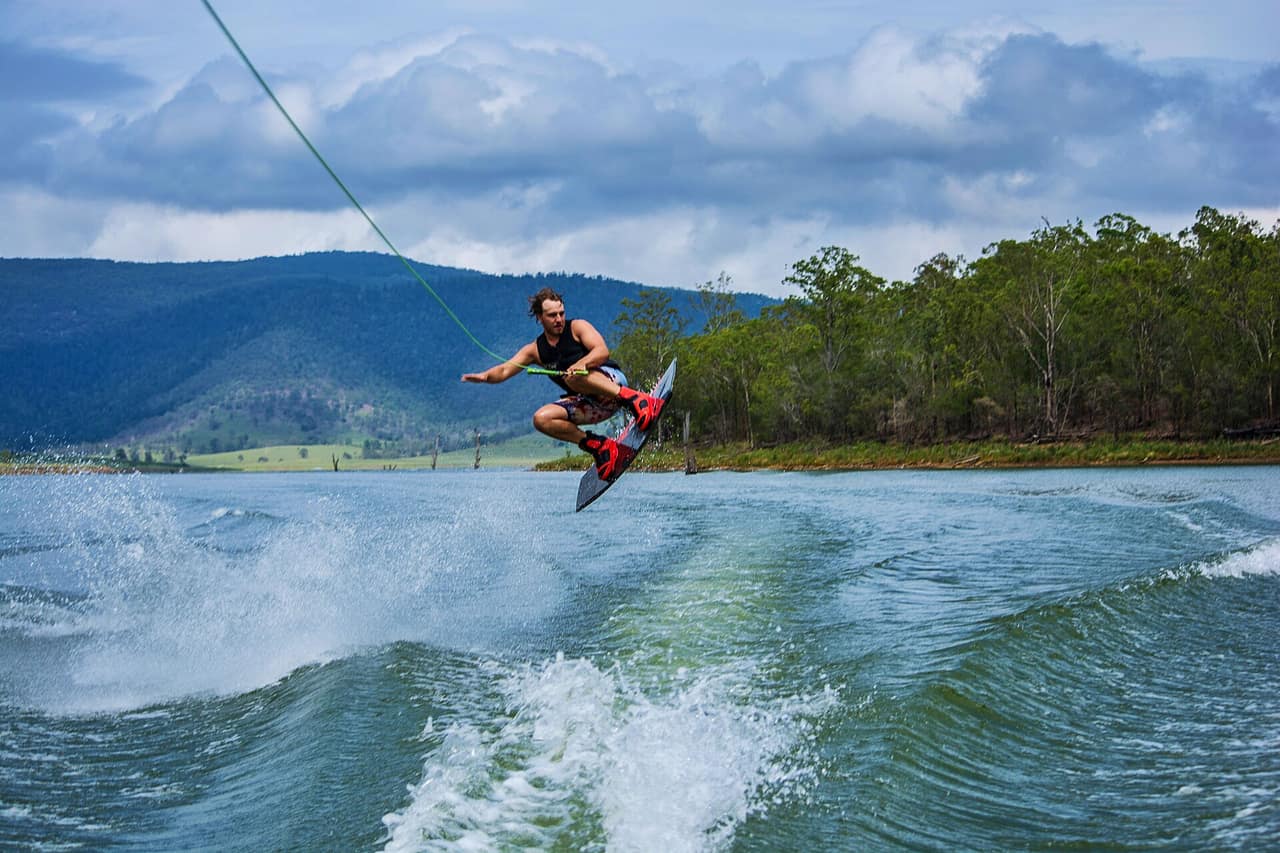
Two decisions cover almost everything about a first wakeboard. Size it by weight, not height, and choose a continuous rocker. Get those right and any reputable board in the beginner category will work.
The sizing charts are worth reading carefully because the bands overlap heavily. A 150 lb rider falls inside the recommended range for at least three different lengths, so "size by weight" narrows the field without finishing the job. Where you sit in two bands, take the longer board: more surface area means more float, earlier planing and an easier deep-water start.
| Rider weight | Typical board length |
|---|---|
| Under 100 lb | 119 to 130 cm |
| 100 to 150 lb | 130 to 138 cm |
| 150 to 180 lb | 135 to 142 cm |
| 180 to 250 lb | 140 to 144 cm |
| 250 lb and up | 144 cm and above |
These are indicative. Every board's own chart is on its product page and takes precedence, because manufacturers shape volume differently and a 140 from one brand floats differently from a 140 from another.
Continuous rocker is one smooth curve from tip to tail. The board carries speed, holds a predictable line, and releases from the wake gradually rather than abruptly. This is what you want while learning.
Three-stage rocker has a flat centre section with distinct kicks at each end. It produces a more vertical pop off the wake, which is what advanced riders want for height, and a less forgiving ride at every other moment.
For a first board, continuous, without qualification.
Fins. Larger removable fins make a board track straighter, which is exactly what a beginner needs and exactly what an advanced rider removes. Keep them on while you learn. Moulded-in channels along the base do a similar job and cannot be removed, which is fine.
Availability and pricing move constantly. These are picked on specification and reputation as beginner platforms rather than on today's price, and each link goes to a current listing.
The board most often handed to a learner, and for good reason: continuous rocker, a forgiving flex and a size range that runs up to around 145cm. It does everything a first board needs to do and nothing it does not.
The women-specific counterpart to the State, on a continuous rocker with proportions shaped for a lighter rider and a narrower stance. Sizes start smaller, which matters because an oversized board is harder to control, not easier.
Entry to intermediate rather than pure beginner, which makes it the choice if you expect to ride often and do not want to replace the board in a season. Lighter riders take the 134 or 138; heavier riders get better float and edge hold from the 141 or 144.
A board and bindings sold together at the bottom of the market. It is not the best board here and it is not trying to be; it is the one that gets a family on the water without a large outlay, and it does that job honestly.
Around 125cm, with junior bindings sized for small feet. The point of a junior board is not that it is cheaper, it is that a child on an adult board cannot generate the leverage to control it.
For a first board, buy a package. Package bindings are matched to the board's insert pattern, they cost a fraction of buying separately, and until you have ridden enough to know what you dislike about a binding, you have no basis for choosing one.
Two things to check on any package:
A three-stage rocker board, because it makes the hardest part of learning harder.
A board too short for your weight. The instinct is that a smaller board will be easier to handle. It is the opposite: it sits lower, planes later and demands more boat speed to get up.
Carbon and high-end construction. You cannot feel the difference at the stage where you are learning to cross the wake, and you will scratch it.
Before you buy anything, our beginner's guide to wakeboarding covers the boat speed, rope length and getting-up sequence that determine whether a first session works. A cable park session is also the cheapest way to find out whether you want to own a board at all.
Find your weight on the chart for the specific board you are looking at, not a generic one, and take the longer option where you fall between two. Then confirm it is a continuous rocker and that the bindings cover your shoe size.
That is genuinely the whole decision for a first board. Everything else on a spec sheet is aimed at riders who are already jumping.
By rider weight, not height. Every manufacturer publishes a chart mapping board length to a weight band, and the bands overlap. Where you fall in two bands, the longer board is the easier one to learn on.
Continuous. The curve runs in one smooth arc from tip to tail, which makes the board faster across the water, more predictable off the wake and much less likely to catch an edge. Three-stage rocker gives a more vertical pop off the wake and a less forgiving ride.
Yes. More surface area means more float, which means the board planes at a lower speed and pulls a beginner out of the water with less effort. It also tracks straighter and is more stable at slow speed. The trade-off is that it is slower to turn.
For a first board, yes. Package bindings are matched to the board's insert pattern and are far cheaper than buying separately. Buy bindings separately when you know your stance and what you dislike about the ones you have.
Entry-level board and binding packages sit at the bottom of the market and rise steeply from there. Prices change constantly, so check the current figure on the product page rather than budgeting from an article. Buying last season's model is the reliable way to spend less.
Not to start with. Cable riders often prefer more flexible bindings and boards with a reinforced base for hitting obstacles, but a standard beginner setup works fine at a cable park while you learn.
Junior boards, typically around 119 to 130cm, sized by the same weight bands. Hyperlite's State Junior and Eden Junior sit around 125cm. Putting a child on an adult board is the most common way to make learning harder than it needs to be.
One word, two activities that share almost nothing but a bag. Which one you mean changes the gear, the cost, the risk and the skills, so it is worth settling first.
Bleach is the reflex and it is the wrong tool on chair fabric. It removes the stain, leaves the growth, and wrecks the colour. Here is the method that works.
These masks are genuinely more comfortable and there is a body of drowning research pointing at them. Both things are true, and a buying guide that ignores the second is not worth reading.