
Destinations
Where to Eat in Seoul: 71 Bib Gourmands Against 42 Stars
The best-value restaurant list in Seoul is not the starred one. Here is how I choose where to eat, and the honest situation at the market everyone tells you to visit.
One metal tub on the bank of the Salmon River, fed by a 136F spring through a length of pipe. Getting a soakable temperature is a job you do yourself, with a bucket.
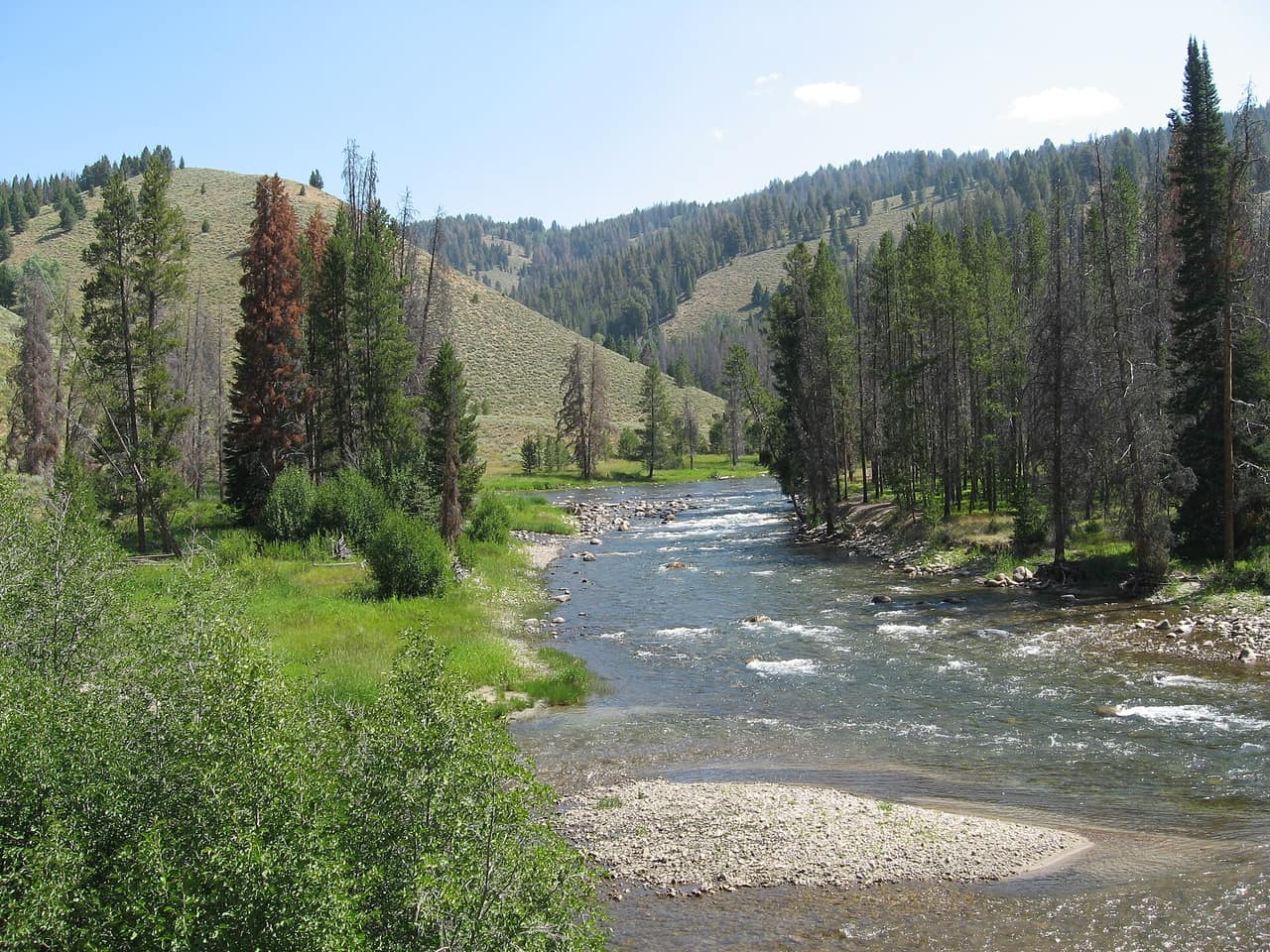
Boat Box is a single metal tub on the bank of the Salmon River, three miles from Stanley, fed by a spring that comes out of the ground at about 136F. The tub sits at roughly 110F once you have dealt with that, and dealing with it is your job: there is a length of pipe you reposition and a bucket you fill from the river.
That 26-degree gap between the source and a soakable temperature is the whole character of the place. Nobody manages it. There is no attendant, no valve and no thermostat, just a pipe, a bucket, and whatever the last group left behind.
There is no sign. The site is a gravel pullout on the river side of Idaho State Highway 75, in Custer County, and you will drive past it if you are not counting mileposts.
Look between mileposts 192 and 193, roughly three miles from Stanley heading toward Sunbeam. Coordinates are 44.2448, -114.8859. The pullout is small. Three or four cars is a full house, and the highway shoulder here is not a safe overflow lot.
From the pullout it is a short scramble down the bank to the tub. This is not a hike. It is a few steps on loose ground that get slick when wet.
Elevation is about 6,100 feet, which matters more than it sounds. Nights get cold in the Sawtooth Valley in every month of the year, and a 110F tub at 6,100 feet in October is a genuinely different experience from the same tub in July. Most people who love this place love it in the cold.
This is the part that decides whether your visit works. The spring discharges at about 136F, at a rate in the region of 168 litres per minute. Skin damage starts well below that. The tub you actually want is around 110F.
Water reaches the tub through a plastic pipe run into the bank. To fill, you point the pipe into the tub. To stop heating it, you swing the pipe out and let it run onto the ground.
Then you cool what you have with river water, carried up in the bucket that generally lives at the site. Expect to add several bucketfuls. Expect to add more once you are actually sitting in it, because the hot feed keeps arriving unless you have moved the pipe fully clear.
Put a hand and then a forearm in and hold it there for ten seconds before committing. At 120F, skin burns in minutes; at 136F it happens far faster. People get hurt here by climbing in on the assumption that a tub someone else filled is at a comfortable temperature. It might have been topped up from the source thirty seconds before you arrived.
The site bucket is a communal item that disappears regularly. A cheap collapsible bucket in the boot of the car turns a failed visit into a good one, and it weighs nothing. This is the single most useful thing to pack for Boat Box and almost nobody does it.
Spring. Specifically, snowmelt runoff on the Salmon River from roughly May into June.
The Salmon rises hard in runoff. High water submerges the tub, tears out the feed pipe and makes the bank genuinely dangerous. This is not hypothetical: the wooden box the place is named for was destroyed by annual spring flooding, which is why there is a metal tub there now, and the metal tub has itself been carried off by high water and later replaced.
| Season | What to expect |
|---|---|
| June to September | Reliable, busy, tub usually present. Warm air makes a 110F soak less compelling |
| October to November | The best window. Cold air, low water, thin crowds |
| December to March | Excellent if Highway 75 is clear. Check road conditions first, and expect ice on the bank |
| April to early June | Avoid. Runoff can submerge or remove the tub entirely |
Because the tub can be missing outright, this is a trip to combine with something else rather than drive four hours for on its own. If Boat Box is gone or occupied, Sunbeam Hot Springs is a few miles further east on the same highway and is a Forest Service developed site with a stone bathhouse ruin and pools at the river's edge.
Doing more than one Idaho spring? Weir Creek, up on Highway 12 in the Clearwater, is the other roadside soak people pair with a Stanley trip, and it has a rule that catches visitors out: a Forest Service order closes it every night at 8pm. Our guide to Weir Creek Hot Springs covers the order, the trail and the timing.
Heading south instead? Provo, Utah is a long day away and offers the same mountain-and-water combination, with a lake you should probably not swim in.
Published chemistry for the spring lists silicon dioxide at about 72.6 mg/L, sodium at 70.4 mg/L and bicarbonate at 64.7 mg/L, with pH measured between 8.2 and 9.4. That is a mildly alkaline sodium-bicarbonate water, which is why it feels soft and why the smell is faint compared with sulphur-heavy springs elsewhere in the state.
None of that makes it drinkable, and the alkalinity is not a health treatment. The practical takeaways are two: keep your head out of the water, and rinse before you get back in the car if you are sensitive to mineral residue.
Everything. Setting expectations correctly is most of what a guide to this place can usefully do.
Clothing practice is mixed and unpredictable. It is a roadside tub in view of a state highway, so people vary, and there is no screening either way.
Arriving in runoff season. The tub may not physically exist in late May. Check recent visitor reports before driving out in spring.
Assuming the bucket is there. Without it you have a tub of 136F water and no way to cool it, which means you have driven to a hot spring you cannot use.
Parking badly. Four cars fill the turnout. Highway 75 through here carries fast traffic, and parking on the shoulder to walk down a bank is how a soak becomes an incident.
Turning up at 2pm on a Saturday in July. Expect a queue for a tub that holds three people. Early morning and after dark are both far quieter, and there is no closure order here restricting the latter.
Check road conditions on Idaho 511 for Highway 75, throw a collapsible bucket and a headtorch in the car, and plan the stop for October rather than July if the calendar allows it. Then drive the mileposts rather than the map, because the pullout is easy to miss at highway speed.
If the tub is occupied when you arrive, carry on east to Sunbeam rather than hovering. It is the same corridor, it is a developed Forest Service site, and it fits far more than four people.
On Idaho State Highway 75 in Custer County, about three miles from Stanley, between mileposts 192 and 193. The coordinates are 44.2448, -114.8859. Look for a gravel turnout on the river side of the road, not a sign.
The source runs about 136F, which is scalding. The tub sits around 110F once you have mixed in river water. You control the temperature yourself by moving the feed pipe and adding cold water with the bucket.
Yes. It sits on Sawtooth National Forest land, there is no fee, no booking and no permit. There are also no toilets, no changing area and no drinking water.
Three or four at a squeeze. It is a single metal tub, not a pool. On a summer weekend you will queue behind other groups, and there is no system for managing that beyond ordinary courtesy.
Spring runoff, roughly May into June. High water on the Salmon River can submerge the tub, wash out the feed pipe and make the bank unsafe. The historic wooden tub the place is named for was destroyed by spring flooding, and the current tub has been carried off by high water too.
Not at the turnout. Dispersed camping is available elsewhere in the Sawtooth National Recreation Area under Forest Service rules, and there are developed campgrounds along Highway 75 near Stanley.
It is sometimes listed as Elkhorn Hot Springs, which causes confusion with other springs of that name in Montana and elsewhere. If a listing gives the Highway 75 milepost near Stanley, it is this one.
The best-value restaurant list in Seoul is not the starred one. Here is how I choose where to eat, and the honest situation at the market everyone tells you to visit.
Three days is the right length for Rome and the tickets are where people lose money. Two official sites, two mandatory fees, and a route that avoids crossing the city twice.
Seoul had a record 10.71 million visitors in the first half of 2026, and the city answered with rules that carry fines. Here is what the sights cost, which days they close, and the neighbourhood where arriving at the wrong hour is a fineable offence.