
Destinations
Rome in 3 Days: The Booking Fees Nobody Adds Up
Three days is the right length for Rome and the tickets are where people lose money. Two official sites, two mandatory fees, and a route that avoids crossing the city twice.
The best-value restaurant list in Seoul is not the starred one. Here is how I choose where to eat, and the honest situation at the market everyone tells you to visit.
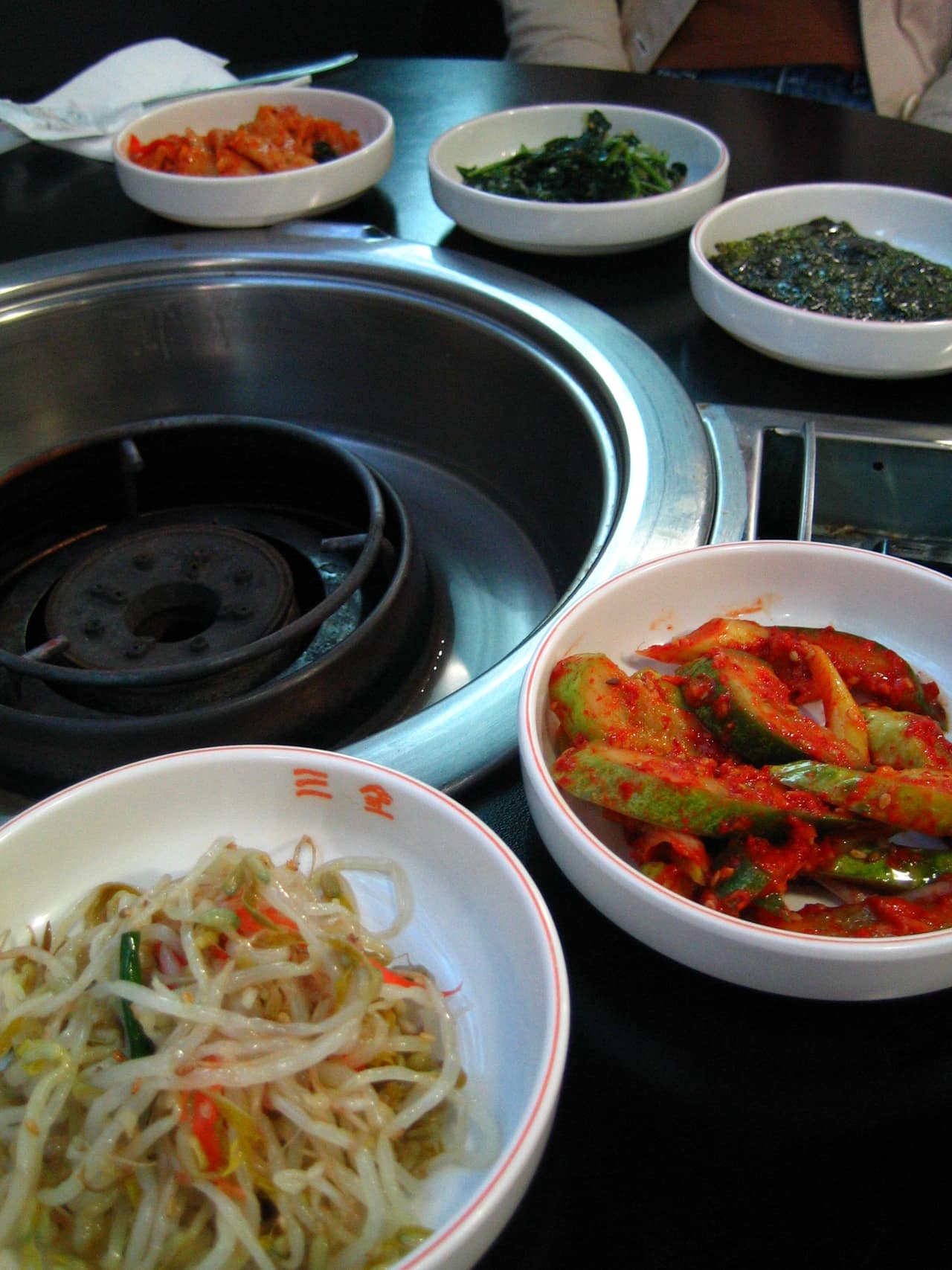
The most useful restaurant list in Seoul is not the starred one.
I counted the categories in the 2026 Michelin Guide for the city: 42 starred restaurants against 71 Bib Gourmand entries, the award for good cooking at moderate prices. The guide points at value nearly twice as often as it points at stars, and the Bib list is where a visitor with a normal budget should start.
There is also something you should know before you go to the market everyone sends you to, and I will get to it.
Three rules, in order.
Get out of the tourist districts. Myeongdong and the streets immediately around the palaces have the highest prices and the lowest average quality in the city. Three subway stops in any direction fixes both. This is the single highest-value decision on the list.
Eat lunch properly. Korean restaurants do their best value at lunch, when set meals are cheapest and the turnover is highest. Many close between services, so aim for noon rather than two.
Follow the office workers, not the queue. A queue outside a place at 8pm in Hongdae tells you it is popular with people who read the same blog you did. A full room of people on their lunch break tells you the food is good and the price is fair.
The 2026 guide covers 233 restaurants across Seoul and Busan, with 178 of them in Seoul. Of the Seoul entries:
| Category | Count | What it means |
|---|---|---|
| Three star | 1 | Worth a journey, booked months out |
| Two star | 10 | Worth a detour |
| One star | 31 | High-quality cooking |
| Bib Gourmand | 71 | Good food, moderate prices |
| Michelin Selected | 116 | Recommended, no award |
The Bib list includes market stalls and single-dish specialists, not just restaurants. It is searchable free on the Michelin Guide site, and filtering it by the neighbourhood you happen to be in is the most efficient meal-finding move available in this city.
The starred restaurants are a different trip. They are excellent, they are expensive by Korean standards, and they require booking weeks ahead. If a tasting menu is what you came for, book it before you book your flights.
Every Seoul guide sends you to Gwangjang, and you should go. You should also know what has been happening there.
In late 2025 a Korean YouTuber published footage of foreign visitors being overcharged and given short portions at market stalls. It ran on national news. Complaints from tourists had already climbed sharply, and in 2026 the Seoul city government launched a full inspection of the market, deploying mystery shoppers and introducing a real-name system for vendors alongside requirements to display prices and portions.
That is an unusual amount of official attention for a food market, and it tells you the problem was real.
Check the posted price before you sit down. Stalls are now required to display prices and portion sizes. A stall that will not show you one is telling you something.
Know the going rate. Bibimbap runs about 6,000 to 7,000 won. One person can eat until full for under roughly 20,000. A quote well above that is not the market rate.
Go at lunch on a weekday. Locals are there, turnover is fast, and the stalls behaving badly do it to evening tourist crowds rather than to a queue of office workers.
None of that is a reason to skip it. Gwangjang is genuinely one of the great food markets, the bindaetteok and the knife-cut noodles are worth the trip, and the fix is simply to look at the price first.
Namdaemun is bigger, older and less visited by foreigners for food. Tongin Market near Gyeongbokgung runs a lunchbox system where you buy brass tokens and trade them at stalls for portions, which is a genuinely fun way to eat and much less chaotic. Noryangjin is the fish market, best at dawn, where you buy downstairs and have it prepared upstairs.
Tongin is the one I would send a first-timer to over Gwangjang, purely because the token system removes every pricing question.
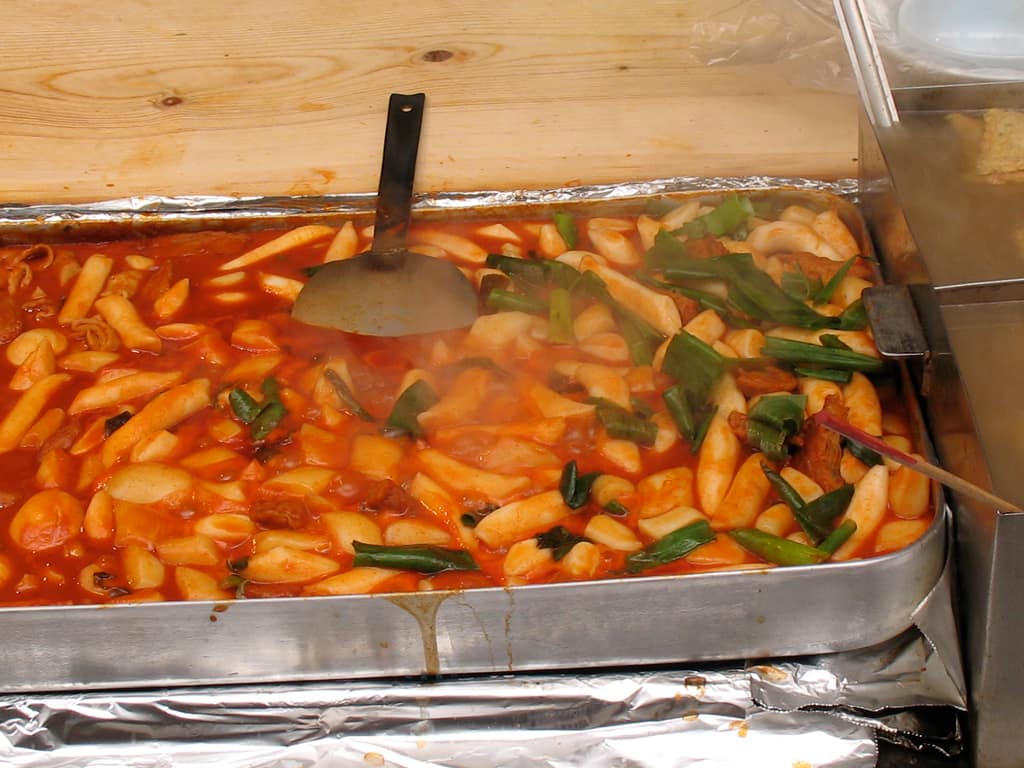
Seoul specialises by street, which is genuinely useful once you know it.
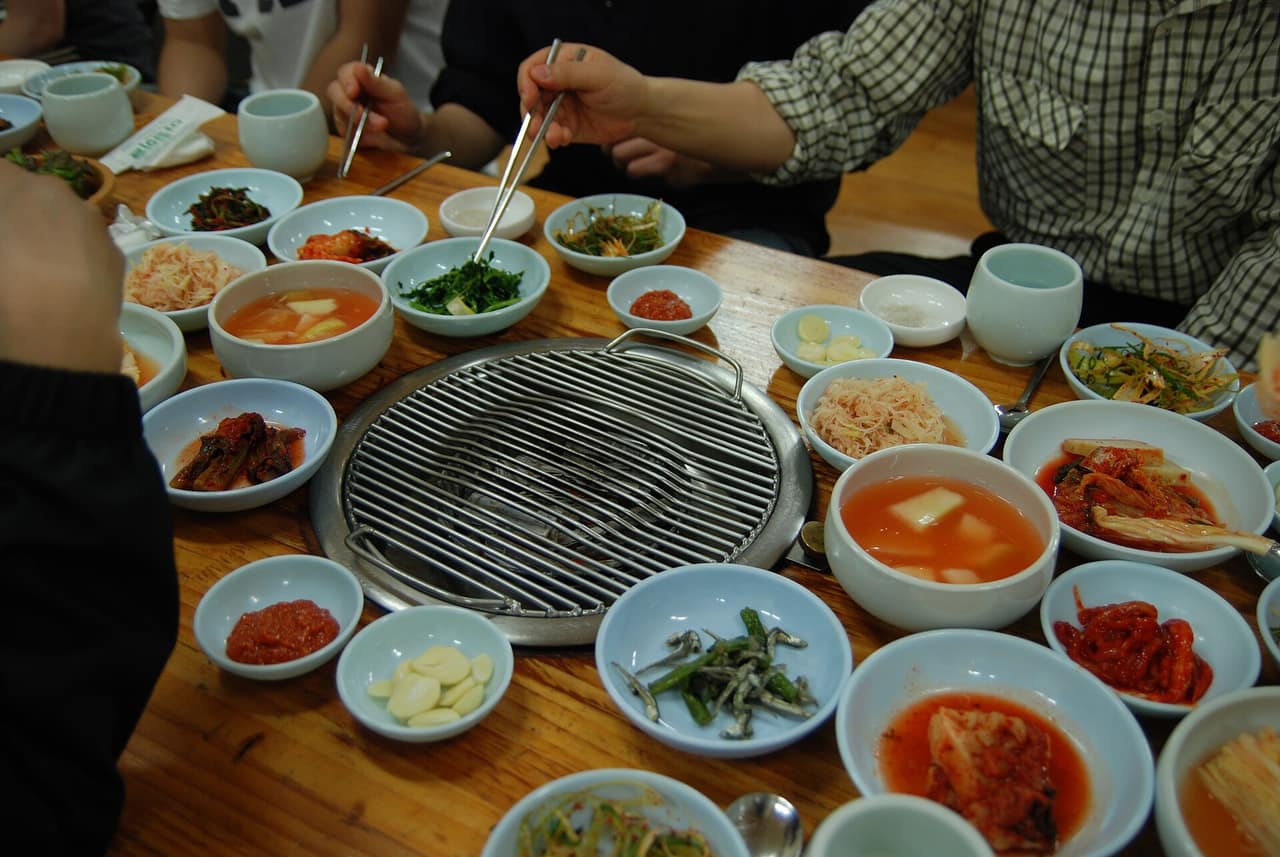
Two-person minimums. Barbecue and many stews are portioned and priced for two. Solo travellers eat brilliantly in Korea, just not at a grill table.
Cash at markets. Cards work almost everywhere else. Markets are the exception.
No tipping. The menu price is the price, and a tip causes confusion rather than pleasure.
Water and banchan are free, and banchan is refillable. Ask.
Closing between services. Lots of good lunch places shut at two and reopen at five.
Translation apps handle Korean signage well. Camera mode on a menu works. A restaurant with no English menu is usually a better sign than a worse one.
If the dishes themselves are the unfamiliar part, my guide to Korean food covers what to order, why the small dishes arrive free, and what UNESCO actually listed in 2013, which is not what most food writing says it is. If you are still building the days themselves, my guide to things to do in Seoul covers the palace closing days that decide which morning you are free for a market.
Open the Michelin Bib Gourmand list, filter it to the district you are sleeping in, and pick a lunch. That single step gets you a vetted, moderately priced meal in a neighbourhood you will actually be in, which is more than any general list of restaurants can do.
Then keep one market evening for Gwangjang, go on a weekday, and read the posted price before you sit down. The food there is worth the trip and the pricing is worth the two seconds of attention.
It is Michelin's category for good cooking at moderate prices, awarded separately from stars. Seoul has 71 of them against 42 starred restaurants in the 2026 guide, which makes it the most useful list in the city for anyone not booking a tasting menu.
Parts of it have been. A viral exposé in late 2025 showed foreign visitors being overcharged and given short portions, tourism complaints rose sharply, and Seoul launched a full inspection of the market in 2026 including mystery shoppers and a real-name system for vendors. Go, and check the posted price before you order.
Bibimbap runs around 6,000 to 7,000 won at a market stall, and one person can eat until full for under about 20,000 won. If a stall quotes you well above that without a posted price, walk to the next one.
Photograph the menu and run it through a translation app's camera mode, which handles Korean signage well. Failing that, point at what a neighbouring table is eating. Small restaurants with no English are usually the ones worth being in.
Lunch runs roughly noon to two and is when the best-value set meals are served. Dinner starts around six and goes late. Many good lunch places close between services, so a two-thirty arrival finds shutters down.
A barbecue restaurant in a residential neighbourhood rather than in Myeongdong. The tourist districts have the highest prices and the lowest average quality in the city, and three subway stops out changes both.
For starred restaurants, weeks ahead. For everything else, almost never. Korea's eating culture is walk-in, queue if it is busy, and turnover is fast.
Three days is the right length for Rome and the tickets are where people lose money. Two official sites, two mandatory fees, and a route that avoids crossing the city twice.
Seoul had a record 10.71 million visitors in the first half of 2026, and the city answered with rules that carry fines. Here is what the sights cost, which days they close, and the neighbourhood where arriving at the wrong hour is a fineable offence.
Your first Korean meal arrives as eight small dishes you did not order. They are free, they are refillable, and almost nobody writing about Korean food tells you either thing.