
Destinations
Where to Eat in Seoul: 71 Bib Gourmands Against 42 Stars
The best-value restaurant list in Seoul is not the starred one. Here is how I choose where to eat, and the honest situation at the market everyone tells you to visit.
Your first Korean meal arrives as eight small dishes you did not order. They are free, they are refillable, and almost nobody writing about Korean food tells you either thing.
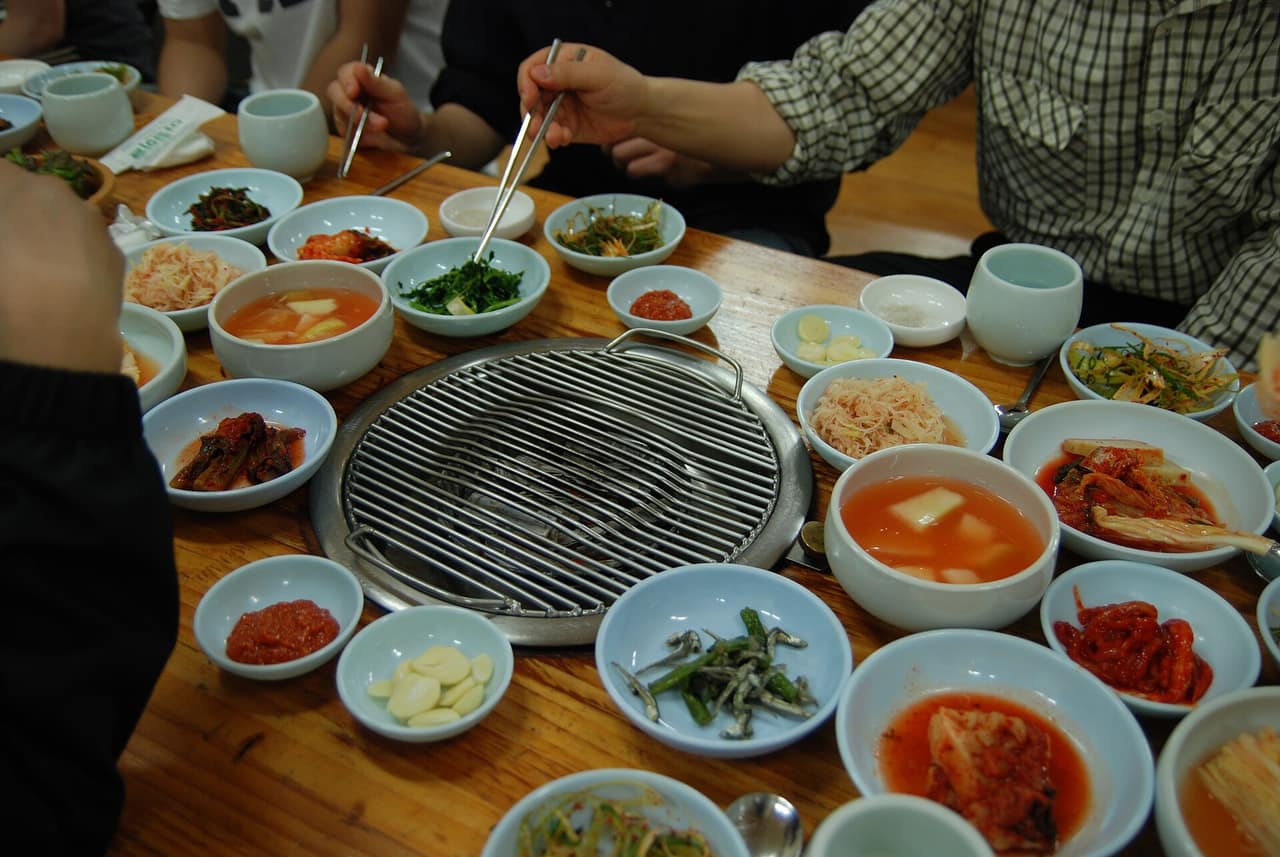
Your first meal in Korea arrives wrong. You order one dish and eight small ones turn up that you did not ask for, and nobody explains them.
They are banchan, they come at no extra charge, and in most restaurants they are refilled for free. Push an empty dish forward or catch the server's eye and it comes back full. No menu says so and no server will offer, which is why visitors sit politely in front of empty plates for entire meals.
Understanding banchan is most of understanding how Korean food works. The meal is not a plate. It is a table.
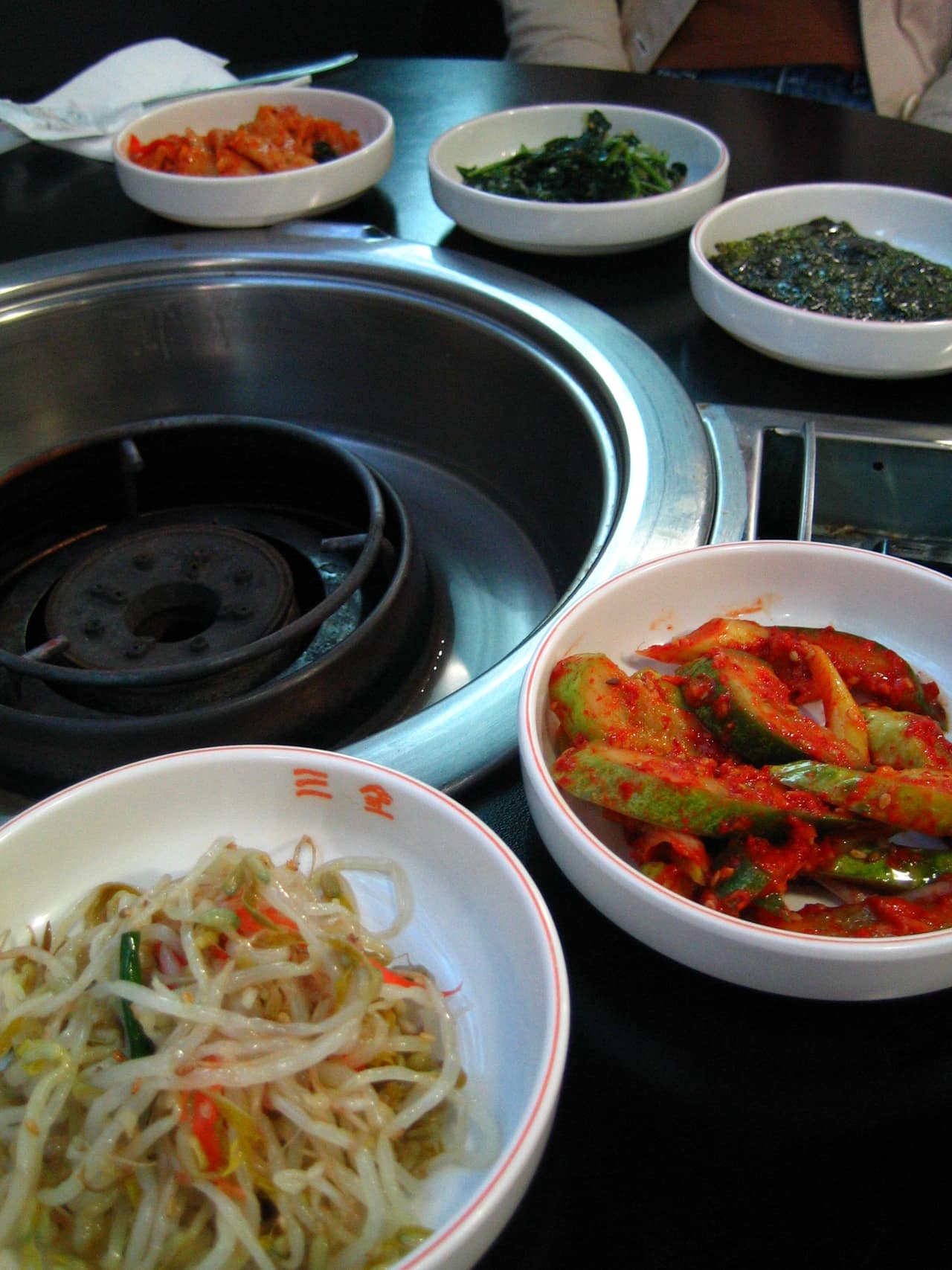
Three parts, always. Bap, the rice. Guk or jjigae, a soup or stew. Banchan, the side dishes. Everything else is built on that frame.
There is no course structure. It all lands together and you move between things: a mouthful of rice, some stew, a pickled radish, back to the rice. Nothing is a starter, nothing is a dessert, and the balance across the table is the point rather than the progression through it.
Two rules that are easy to get wrong.
Do not lift your rice bowl. Unlike in Japan or China, the bowl stays on the table and you eat from it with a spoon. The spoon does rice and soup, the chopsticks do everything else, and using both at once is the visible tell of someone who has not eaten here before.
Do not stand chopsticks upright in rice. It resembles incense at a funeral. Lay them across the bowl or on the rest.
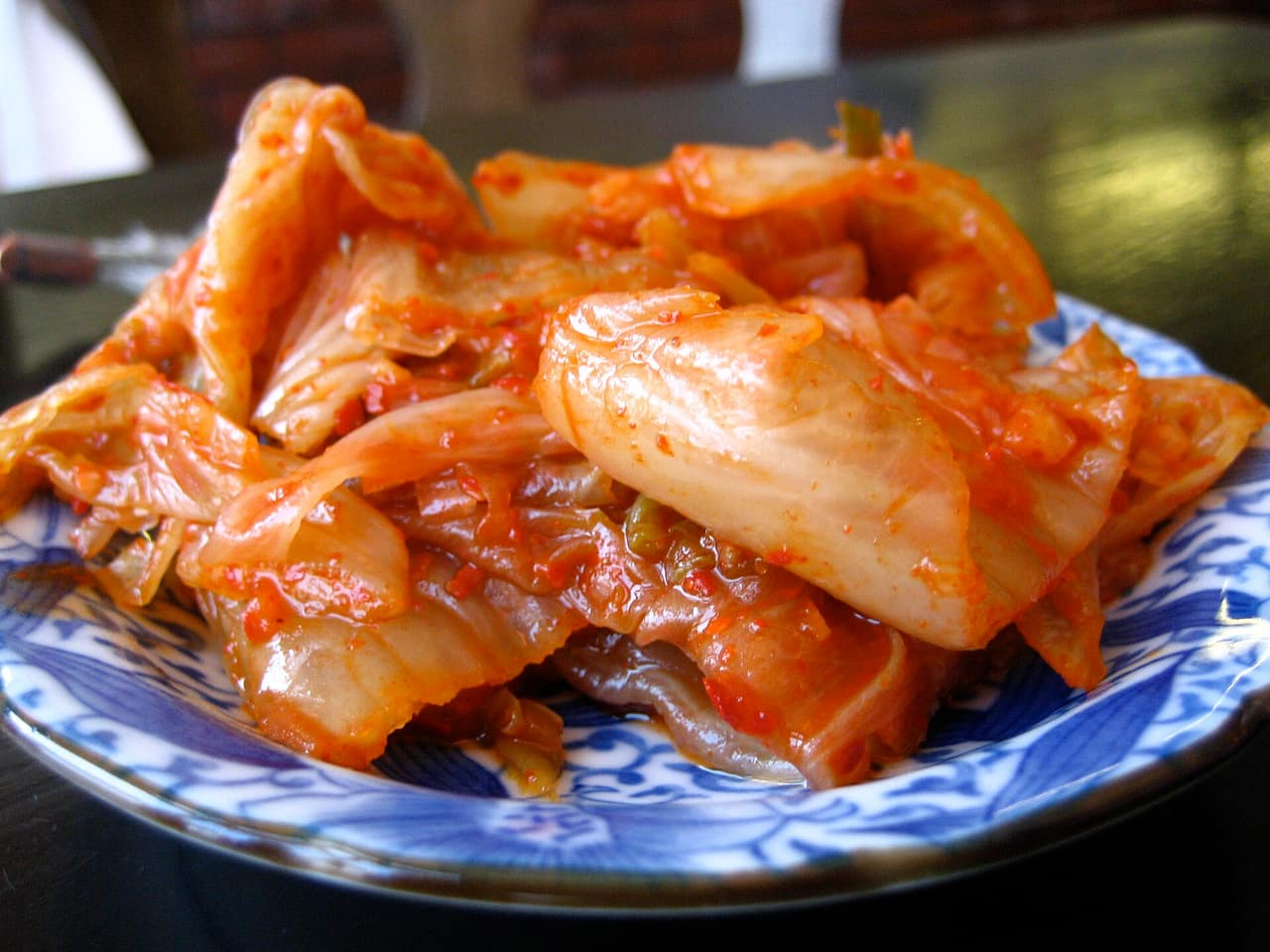
In 2013 UNESCO inscribed kimjang, the making and sharing of kimchi, on its Representative List of Intangible Cultural Heritage.
The listing is for the practice, not the food, and the distinction goes missing almost everywhere the fact is repeated. Kimjang is the communal autumn work of making enough kimchi to last a winter, done across families and neighbourhoods, and UNESCO's citation is about cooperation and shared identity rather than a recipe. North Korea holds a separate inscription for its own kimchi-making tradition, added in 2015. Two states, two listings, neither of them for a jar of cabbage.
This is where food writing quietly invents precision. The numbers in circulation come from different classification systems and none of them is wrong, exactly.
| Source | Count |
|---|---|
| Wikipedia's kimchi article | over 180 recognised varieties |
| World Institute of Kimchi, the state research body | over 250, by ingredient and season |
| A survey published in 2000 | 336 |
| Classification by preparation method | past 1,000 |
Pick whichever you like, then say where it came from. What matters at the table is that the red napa cabbage version is a fraction of the field, and you will also meet kkakdugi, cubed radish, the standard partner for soup; oi sobagi, stuffed cucumber, a summer kimchi; baek kimchi, white and unspiced, which surprises people who think kimchi means heat; and dongchimi, a watery radish kimchi served cold in its own brine.
Kimchi is also an ingredient, not only a side dish. Kimchi jjigae, kimchi fried rice and kimchi pancake exist because kimchi sours as it ages, and old kimchi is cooking kimchi.
One footnote for anyone reading labels: in 2021 South Korea's Ministry of Culture, Sports and Tourism set xinqi (辛奇) as the official Chinese rendering of kimchi, to separate it from pao cai. The naming was not popular with everyone, and you will still see both.
The one everyone knows. You cook the meat yourself on a grill set into the table, cut it with scissors, and wrap pieces in lettuce with garlic, ssamjang paste and rice.
Samgyeopsal is pork belly and the default. Galbi is marinated short rib and the special-occasion version. Both are ordered by weight, usually with a two-portion minimum, which is the reason solo travellers find barbecue hard to get and the reason two of seven guides bother to mention.
The wrap is the technique: leaf in your palm, meat, a little rice, a dab of ssamjang, fold, one mouthful. Not two.
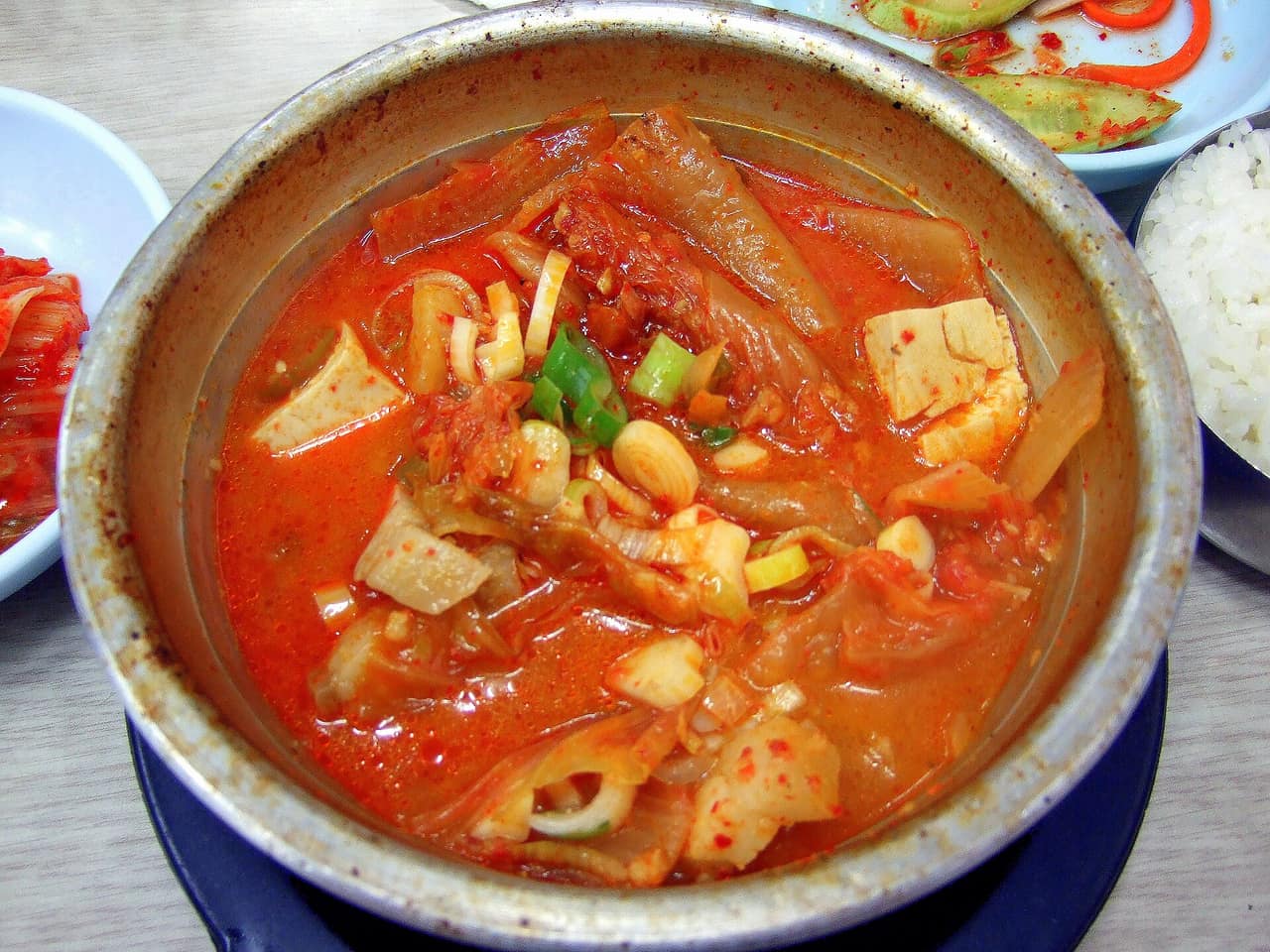
This is the everyday food of the country and the part of the menu visitors walk past on the way to barbecue.
Kimchi jjigae, sour aged kimchi with pork and tofu, is the standard. Doenjang jjigae is fermented soybean paste, deeply savoury and not spicy. Sundubu jjigae uses silken tofu and arrives still boiling. Samgyetang is a whole young chicken stuffed with rice and ginseng, eaten in the hottest weeks of summer on the logic that heat fights heat.
A stew, a bowl of rice and the banchan that come with them is a complete lunch for one, usually between 8,000 and 12,000 won, and no restaurant will think anything of a solo diner ordering it.
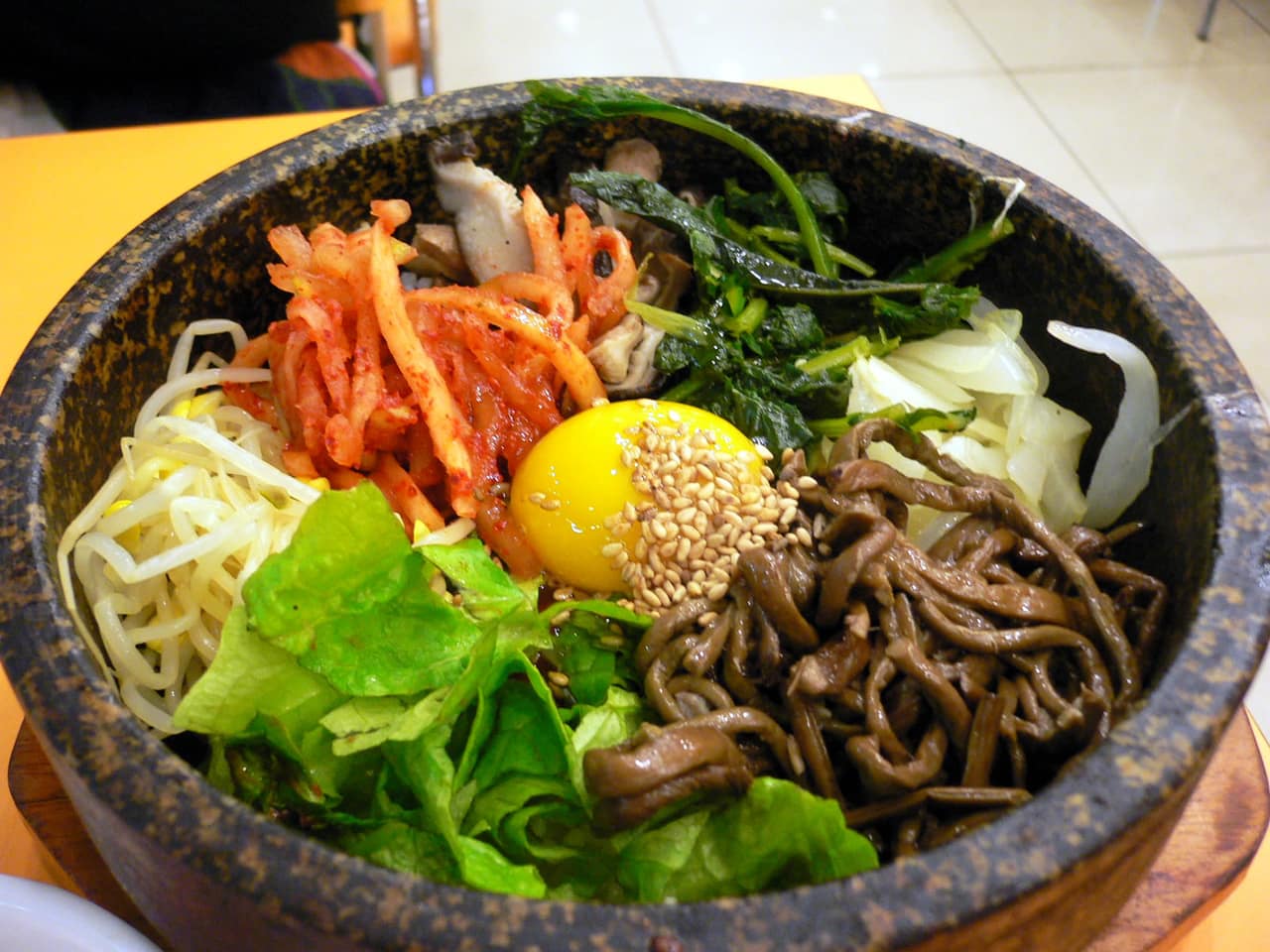
Rice topped with seasoned vegetables, meat, an egg and gochujang. Order the dolsot version in a hot stone bowl where you can, because the rice against the stone crisps into the best part of the dish.
Mix it properly. Not a polite stir: a full mix until the colour is even and the gochujang has reached everything. Under-mixing is the single most common visitor error with this dish, and it is why some people report bibimbap as bland in one bite and violent in the next.
Japchae, sweet potato starch noodles stir-fried with vegetables, chewy and not spicy. Naengmyeon, cold buckwheat noodles in an icy broth, which sounds unpromising and is the best thing in a Korean summer. Kalguksu, hand-cut wheat noodles in a plain hot broth, the food of a rainy afternoon. Bulgogi, thin marinated beef, the gentlest introduction to the cuisine. Korean fried chicken, twice-fried and glazed, ordered with beer often enough that the combination has its own word, chimaek.
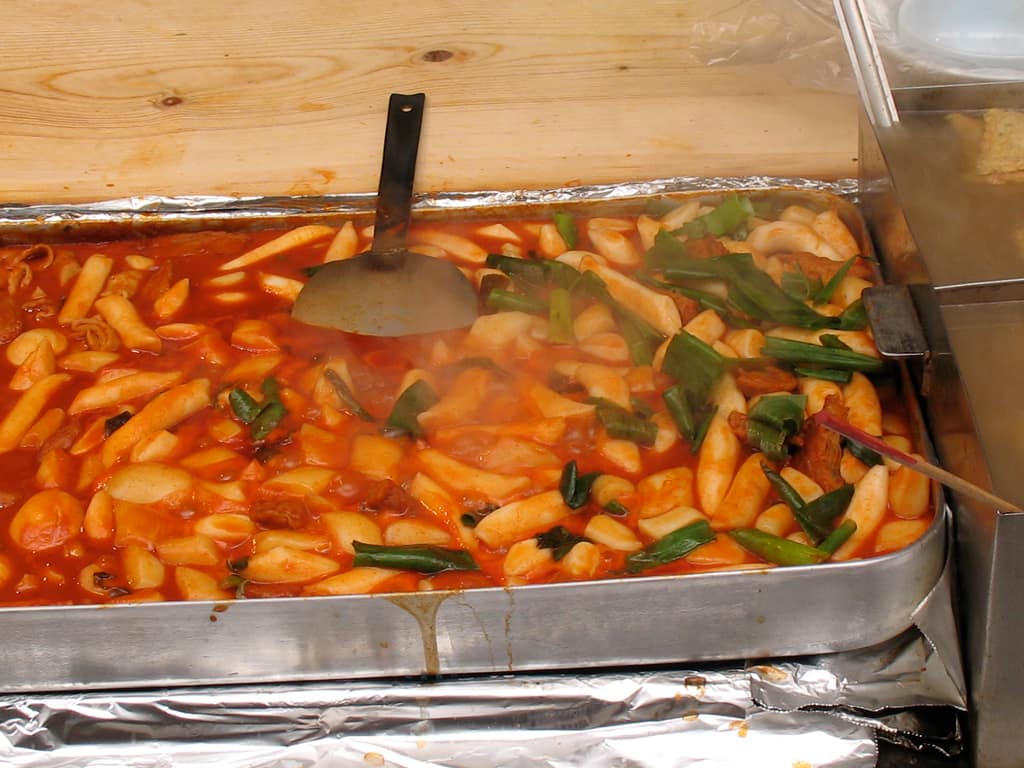
Tteokbokki, chewy rice cakes in a thick sweet-hot sauce. Hotteok, a griddled pancake filled with molten brown sugar and nuts, a winter food worth planning a winter trip around. Gimbap, rice and fillings rolled in seaweed, the cheapest good lunch in the country and not sushi. Bindaetteok, a mung bean pancake fried in more oil than seems wise.
One current caution. Seoul's Gwangjang Market spent late 2025 dealing with an overcharging row after videos of undersized plates and disputed bills went viral, and the city has since required stalls to post portion weight next to the price. The market is still worth your evening. Read the sign, and settle what you are getting before you sit down.
Korea is unusually good at cheap excellence, and there is a published list of it.
The MICHELIN Guide Seoul and Busan 2026 awards Bib Gourmand status to 71 restaurants, 51 of them in Seoul, and in Korea the Bib Gourmand line is drawn at a full meal for under 45,000 won per person. That is roughly 30 US dollars for a proper sit-down meal chosen by inspectors. For contrast, the same guide lists 42 starred restaurants in Seoul, of which one holds three stars.
Below that line the city gets cheaper fast: a stew lunch at 8,000 to 12,000 won, gimbap at about 4,000, a market plate for a few thousand more.
And then there are the convenience stores, which are not a compromise in Korea. The four big chains ran 53,266 branches at the end of 2025, close to one for every 950 people and the highest density in the world. They sell hot food, decent gimbap, and instant noodles you assemble at a counter with a hot water tap and eat standing up. Japan, with more than twice the population, has around 57,000.
Eating your way through Seoul rather than the sights? The neighbourhoods decide what lands on the table, and the markets have new pricing rules this year. My guide to things to do in Seoul covers where to eat and what the city now charges for the rest of it.
Less than the reputation. Heat comes from gochujang, a fermented chilli paste, and gochugaru, chilli flakes, and it sits in specific dishes rather than spreading across the cuisine.
Not spicy at all: galbi, bulgogi, japchae, gimbap, doenjang jjigae, samgyetang, naengmyeon, kalguksu, most banchan.
Genuinely spicy: buldak, spicy tteokbokki, jjamppong, and kimchi jjigae made with well-aged kimchi.
The phrase to learn is deol maepge (덜 맵게), less spicy. It works where the dish is cooked to order and not where the sauce was made this morning in a vat, which is most street food. Ask anyway.
Water and side dishes are free. Water is usually self-service from a dispenser by the door. Banchan refills are free. Nobody will offer, so you have to ask.
Two-person minimums are real. Barbecue, and several stews, are priced and portioned for two. Solo diners eat very well in Korea, just not at a grill table.
Scissors are cutlery. Meat, noodles, pancakes. This is normal.
You will share. Stews arrive in one pot and, in plenty of places, with communal spoons.
No tipping. The menu price is the price. Leaving money on the table causes confusion rather than pleasure.
Order at the table, pay at the counter. In most small restaurants the bill is settled on the way out, not brought to you.
One barbecue dinner, with at least one other person. One jjigae lunch with rice and banchan, ideally somewhere small with no English menu. One bibimbap, mixed properly. One market evening working through street food. One bowl of naengmyeon if it is warm, one hotteok if it is cold, and one Bib Gourmand meal on the night you want to eat seriously without spending seriously.
That covers the four ways Koreans actually eat, and the whole week costs less than two restaurant dinners in most Western capitals.
Learn one sentence: deol maepge juseyo, less spicy please. Then order a jjigae at lunch on your first full day rather than saving the stews for later. The stew, rice and banchan combination is the meal the entire cuisine is built around, and every other dish makes more sense once you have eaten it.
Then, at that first lunch, finish a banchan dish deliberately and push it forward. Watching it come back full is the moment Korean eating stops being confusing.
Banchan. They are side dishes served alongside the main food, they come at no extra charge, and in most restaurants they are refilled free. Ask, or push the empty dish forward, and it comes back full.
Kimjang is, which is not the same thing. UNESCO inscribed the making and sharing of kimchi on its Representative List of Intangible Cultural Heritage in 2013. The listing recognises the communal autumn practice, not the dish. North Korea has a separate inscription for its own kimchi-making tradition, added in 2015.
Nobody agrees. Wikipedia says over 180 recognised varieties, the World Institute of Kimchi says over 250, and a survey in 2000 counted 336. Classified finely enough by method, the count runs past a thousand. Any guide quoting one confident number has picked one and dropped the rest.
There is no single official answer and Koreans will give you different ones. Kimchi is the cultural answer, bibimbap the dish most often served to visitors, bulgogi the one most exported. If you want one meal that explains the cuisine, order a stew with rice and banchan.
Some of it, and much less than the reputation suggests. Gochujang and gochugaru give heat to particular dishes, while galbi, japchae, gimbap, doenjang jjigae and most banchan are not spicy at all. Say deol maepge for less spicy.
Use the Michelin Bib Gourmand list, which in Korea marks restaurants where a full meal costs under 45,000 won per person. The 2026 selection has 51 of them in Seoul. Below that, a stew lunch or a market plate runs 8,000 to 12,000 won.
Often not. Barbecue is usually priced and portioned per two servings, so a solo diner is quoted for two. Stews, noodles, gimbap and convenience-store food are all built for one, and a good jjigae place will seat you without comment.
No. Tipping is not customary in Korea and can cause confusion. The price on the menu is the price you pay, and water and side dishes are not extra.
The best-value restaurant list in Seoul is not the starred one. Here is how I choose where to eat, and the honest situation at the market everyone tells you to visit.
Three days is the right length for Rome and the tickets are where people lose money. Two official sites, two mandatory fees, and a route that avoids crossing the city twice.
Seoul had a record 10.71 million visitors in the first half of 2026, and the city answered with rules that carry fines. Here is what the sights cost, which days they close, and the neighbourhood where arriving at the wrong hour is a fineable offence.