

Destinations
Where to Eat in Seoul: 71 Bib Gourmands Against 42 Stars
The best-value restaurant list in Seoul is not the starred one. Here is how I choose where to eat, and the honest situation at the market everyone tells you to visit.
The sand is the easy part. Lake Michigan takes more lives than the other four Great Lakes combined in most years, and the reason is a current type that only exists here.
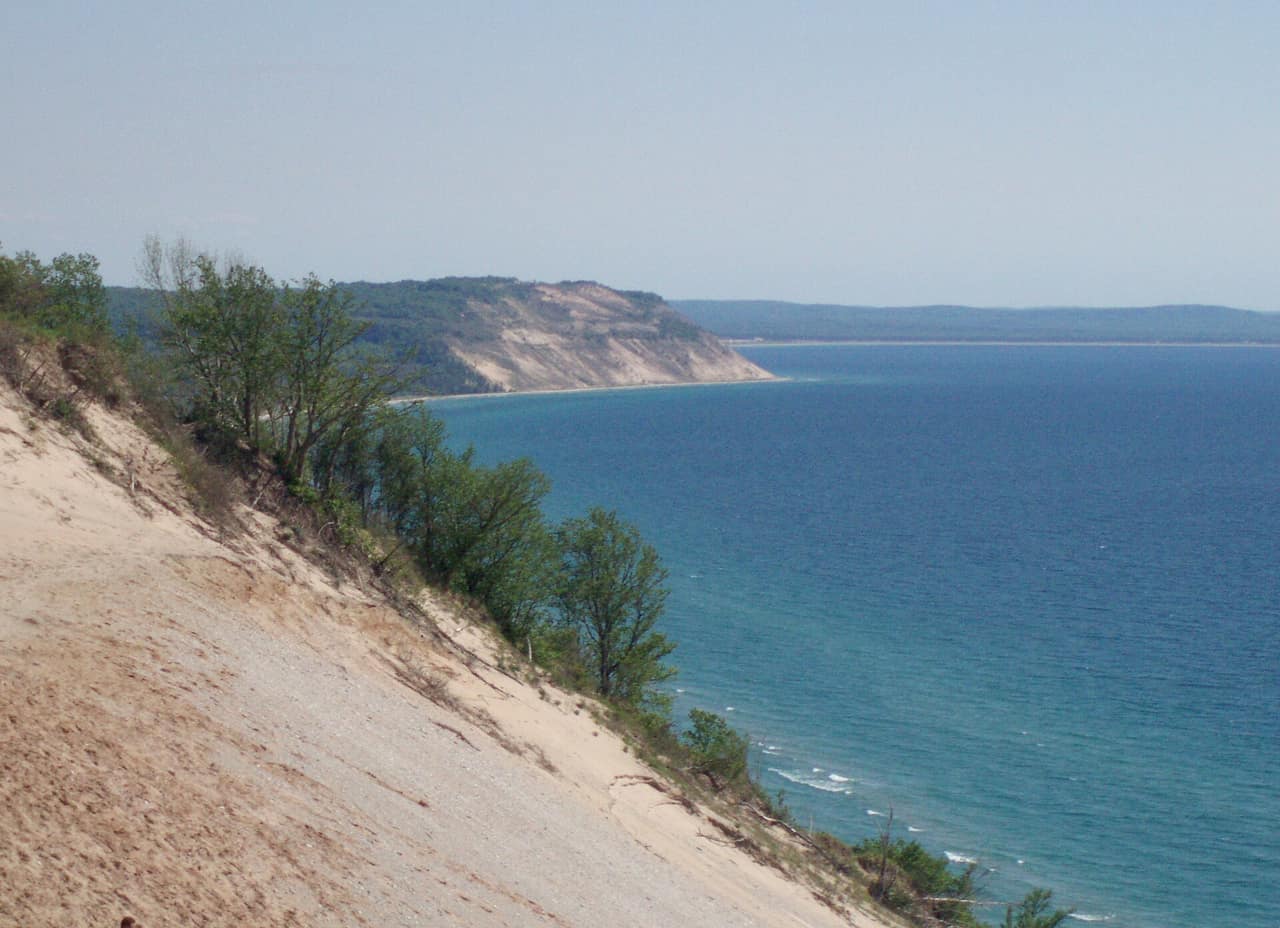
Lake Michigan has the best freshwater beaches in the United States and it kills more people than the other four Great Lakes together in most years. Those two facts belong in the same sentence, because almost every guide to Michigan's beaches publishes the first and omits the second.
The Great Lakes Surf Rescue Project has recorded 1,460 drownings across the Great Lakes since 2010. In 2025 the total was 81, and 36 of those were in Lake Michigan. Through 28 July 2026 the count stood at 46, with 23 in Lake Michigan. One lake, roughly half the deaths, year after year.
This guide covers nine beaches worth the drive, what it costs to park at each, and the specific current type that makes this shoreline different from an ocean beach.
Three different systems, and mixing them up is the most common planning error.
Michigan's state parks use a per-vehicle annual pass rather than a per-visit gate fee. The Recreation Passport covers vehicle entry to 103 state parks and recreation areas, more than 1,300 boating access sites and 140 state forest campgrounds.
Two details that save money and are widely missed:
The price is not set by the DNR. Michigan statute ties the resident fee to the Detroit Consumer Price Index, which is why it creeps up most Januaries: $12 in 2020, $13 from March 2023, $14 from January 2024 and higher since. Check michigan.gov/RecreationPassport for this year's figure rather than trusting any article, including this one, on the exact number.
Sleeping Bear Dunes is National Park Service ground. The Recreation Passport does not work there. It charges its own entrance fee and accepts the America the Beautiful annual pass, which is the one worth holding if your summer includes any other national park.
South Haven, St. Joseph, Grand Haven and most other lakefront towns run their own beach parking with their own rates, usually seasonal, often with a non-resident premium and increasingly through a parking app rather than a meter. Check the city's own page the week you travel.
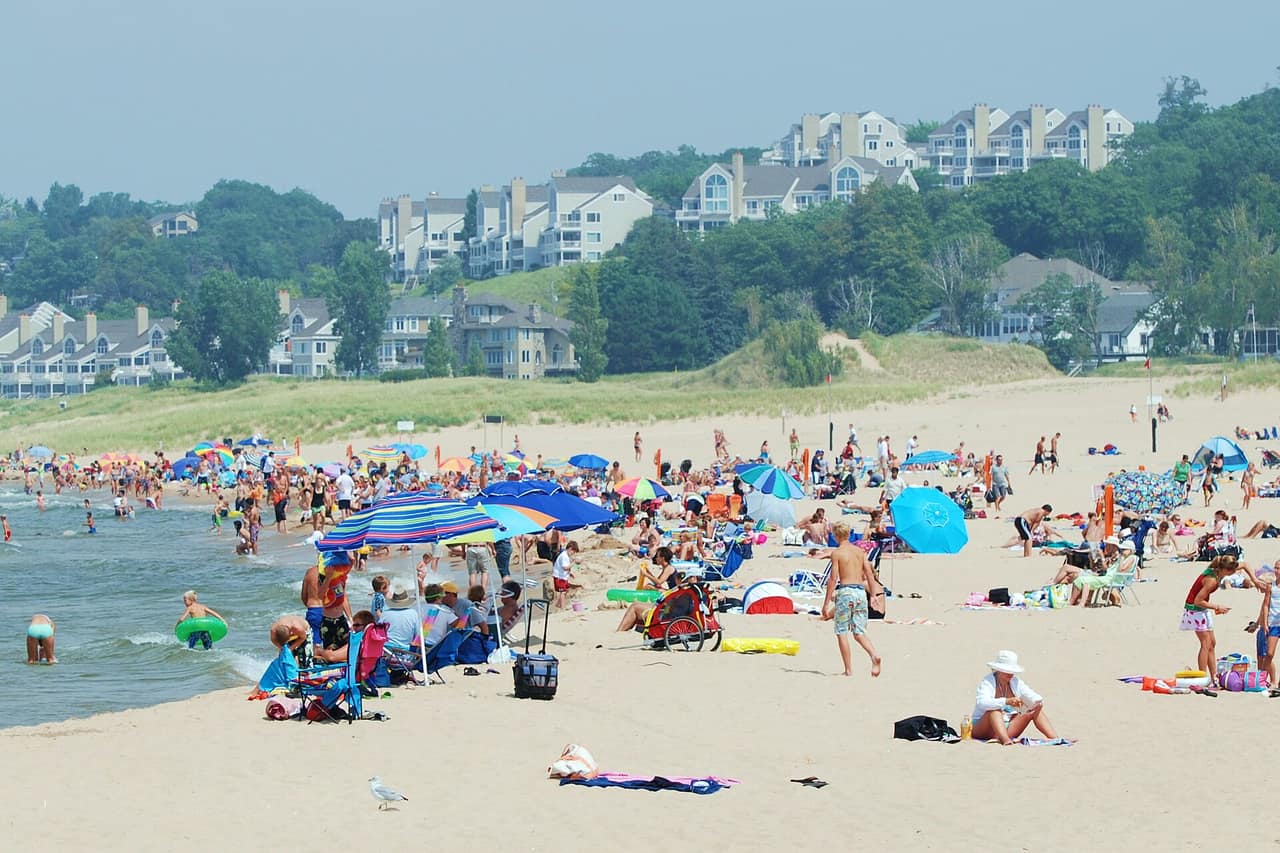
The one that earns its reputation. Good Harbor Bay and the beaches below the Dune Climb give you glacial-blue water over pale sand with dunes rising several hundred feet behind. Federal fee, federal rules, and the Dune Climb is genuinely strenuous rather than picturesque.
The thing to know: the descent from the Lake Michigan Overlook to the water is a 450-foot drop in loose sand. Going down is easy and going back up takes most people an hour or more. Rescues from that slope are routine every summer.
A wide, groomed, busy beach with the Big Red lighthouse next door. Excellent for families in every respect except one: the channel pier is right there, and that is where the current risk concentrates. Swim in the marked area, well away from the structure.
Three miles of shoreline and dunes rising around 240 feet, an hour and a half from Chicago and correspondingly busy on summer weekends. Tower Hill is the well-known climb. Hang gliders use the dunes here, which is unusual and worth watching.
A correction worth making, because it has been copied across a lot of travel writing: Warren Dunes has no connection to "America's Stonehenge." That is a site in Salem, New Hampshire. Nothing of the kind exists at Warren Dunes.
The strongest all-rounder on the list. It sits on a strip between Lake Michigan and Hamlin Lake, so you get big-water beach on one side and warm, calm, swimmable water on the other, plus the Big Sable Point Lighthouse at the end of a 1.8-mile walk. Camping here books out months ahead.
Sand dunes you can legally drive on, in a designated ORV area, alongside a separate pedestrian dune area and a beach. Genuinely unusual, and the reason to come is the driving rather than the swimming.
A compact beach at the mouth of the Grand River with a boardwalk into town, which makes it the easiest one to do without a car once you have arrived. The pier walk to the lighthouse is iconic and is also the single most photographed structural-current hazard in the state.
Small, quiet, and the view south along the Sleeping Bear bluffs from here is the one people remember. A village beach rather than a facility.
North of the St. Joseph channel, less known than the town beach south of it, with good sand and a view of the lighthouses on the pier. Municipal parking.
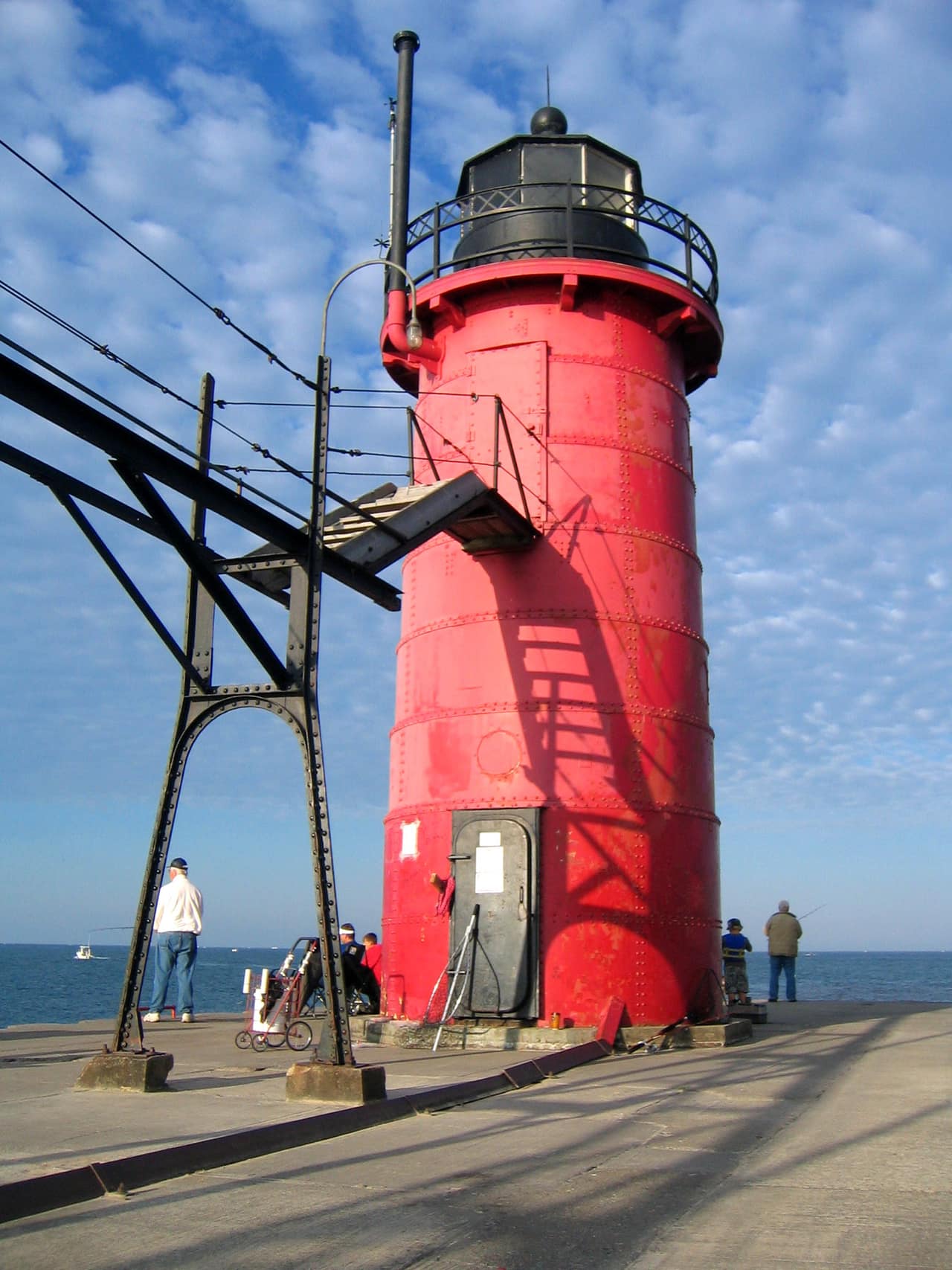
Three separate beaches either side of the Black River channel, a walkable downtown and the most photographed pier on this coast. It has its own guide because the parking, the alcohol rules and the dog restrictions all differ by beach.
Our South Haven beach guide covers which of the three beaches allows what, where the metal detecting is permitted, and what the parking actually costs.
Two reasons, one geographic and one man-made.
Lake Michigan runs roughly north to south, and the prevailing wind in the region comes from the west. That means wind blows across the full width of the lake with nothing to break it, building steep, short-period waves that arrive at the eastern Michigan shore with real energy. The same wind pattern is why the Michigan side has the sand and the Wisconsin side largely does not.
This is the part that has no ocean equivalent, and it is why beach safety advice imported from Florida does not transfer.
Piers, jetties and breakwaters line this coast, built to keep river channels and harbours open. Water moving along the shore hits a fixed structure and is deflected outward along it, forming what Michigan Sea Grant calls a structural current. Three things make these unusually dangerous:
Combine a structural current with a longshore current and a rip and you get the chaotic flow that rescuers describe as a washing machine, in which a swimmer cannot find a consistent direction to escape.
Stay 100 feet from any pier, jetty or breakwater. Not 20 feet, not "outside the swimmers." A hundred feet.
If you are caught, flip, float and follow. Flip onto your back, float to get your breathing under control and your head clear, then follow the current until it weakens and swim in at an angle. Swimming straight at the shore against a current is what drowns strong swimmers.
Check the flag at the beach and the National Weather Service beach hazards statement for the day before you get in. A red flag on Lake Michigan means the same thing it means on an ocean beach and is ignored roughly as often.
August. Surface water temperature is the constraint, not air temperature, and Lake Michigan warms slowly through the summer.
| Month | Typical experience |
|---|---|
| May to June | Cold water, empty beaches, best light for photography |
| July | Warming, crowds building, water still bracing early in the month |
| August | The swimming month, warmest water, busiest weekends |
| September | Warm water, thin crowds, the best value of the year |
| October onward | Storm-watching season, and the wave energy that makes it spectacular makes it lethal |
One local quirk worth knowing: a sustained offshore wind causes upwelling, where cold water from depth replaces the warm surface layer. A beach that was 72F on Saturday can be 52F on Sunday for that reason alone. It has nothing to do with air temperature and it catches people out every summer.
Decide which fee system your beach sits under, because it determines what you buy. State park means a Recreation Passport, and buying it with your plate renewal rather than at the gate saves the $5 surcharge. Sleeping Bear means a federal pass. A town beach means checking that town's parking page the week you go.
Then, before anyone gets in the water, find the nearest pier and walk 100 feet further away from it than feels necessary. That single habit is the highest-value thing in this guide.
Yes, for vehicle entry. The Recreation Passport covers vehicle access to state parks and recreation areas. It is not required if you arrive on foot or by bicycle, which is a genuinely useful exemption at beaches with a town next door.
The resident fee is set by statute against the Detroit Consumer Price Index rather than by the DNR, so it moves most years: $12 in 2020, $13 from March 2023, $14 from January 2024, and rising since. Check michigan.gov/RecreationPassport for the current figure before you travel, and note the $5 surcharge if you buy it at a park rather than with your plate renewal.
No. Sleeping Bear Dunes is a National Lakeshore run by the National Park Service, so it charges its own entrance fee and accepts the America the Beautiful federal pass. The Recreation Passport does not work there.
Its orientation and its piers. The lake runs north to south, so prevailing westerly winds build waves across its full width, and its heavily engineered shoreline creates structural currents alongside piers and breakwaters that can run faster than five miles per hour and are often present even when the water looks calm.
Flip, float and follow. Flip onto your back, float to keep your head above water and control your breathing, then follow the safest path out of the water. Fighting a current directly toward shore is what exhausts swimmers.
At least 100 feet. Structural currents run along and away from fixed structures and are strongest exactly where people like to swim and jump.
Late July through early September for most people, with August the reliable month. Surface temperature varies enormously with wind, and an offshore wind can drop a swimmable beach by 20F overnight through upwelling.
The best-value restaurant list in Seoul is not the starred one. Here is how I choose where to eat, and the honest situation at the market everyone tells you to visit.
Three days is the right length for Rome and the tickets are where people lose money. Two official sites, two mandatory fees, and a route that avoids crossing the city twice.
Seoul had a record 10.71 million visitors in the first half of 2026, and the city answered with rules that carry fines. Here is what the sights cost, which days they close, and the neighbourhood where arriving at the wrong hour is a fineable offence.